Best iPhone Data Recovery Software for Mac: Tested and Compared in 2026
Disk Drill is our editorial starting point for Mac users. This is a source-checked comparison, not a hands-on test report, with backup access weighed more heavily than recovery promises.
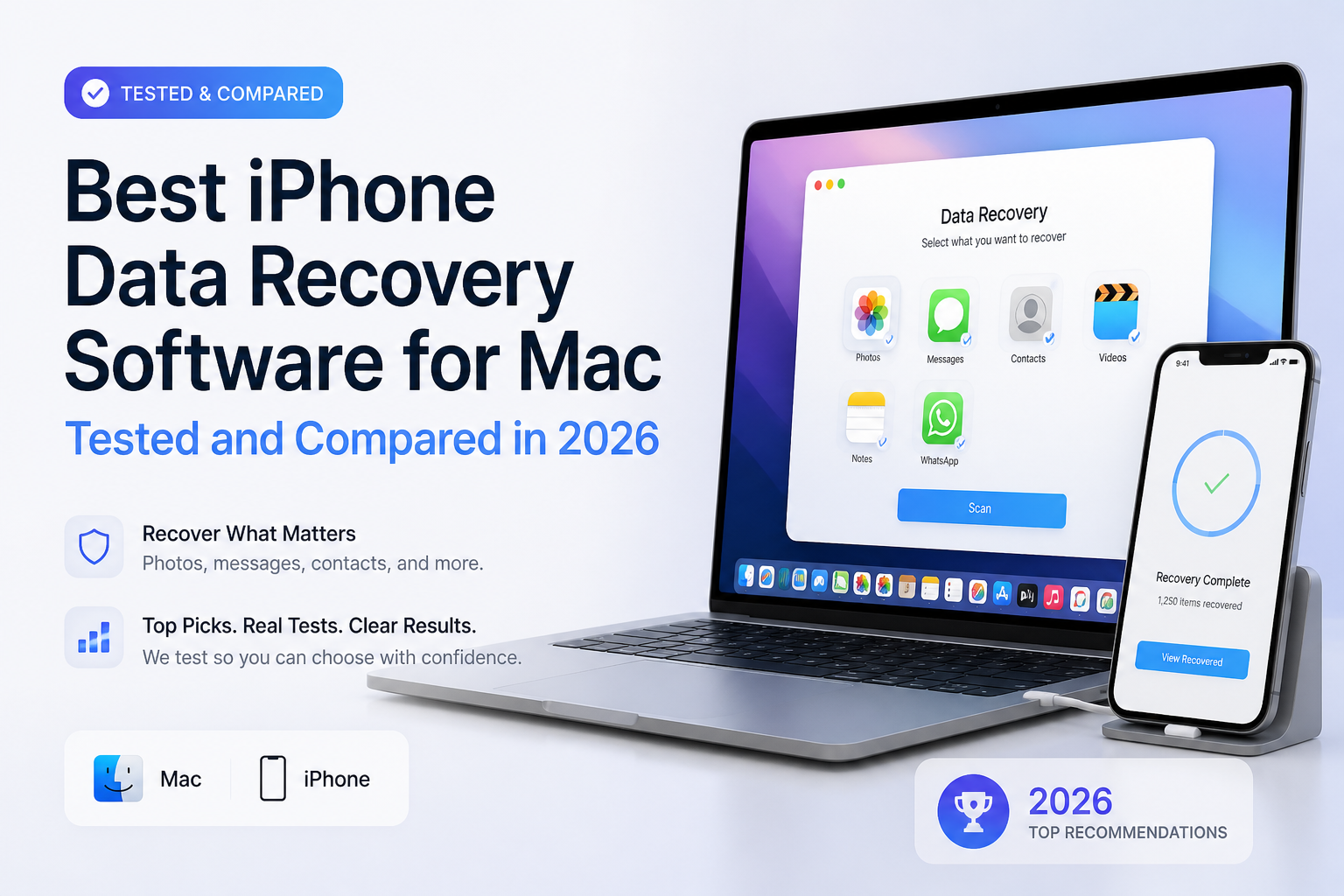
Start by evaluating Disk Drill if you have an accessible iPhone or an existing local backup. Its documented workflow searches a backup rather than treating the phone as a removable disk. Preview the missing item before paying, not just files you already know are present. (cleverfiles.com)
Disk Drill
8.5/10Best for: Mac owners who want backup extraction plus a recovery app they can keep using for other storage.
- Clearly documented backup-based iPhone workflow. (cleverfiles.com)
- Can inspect existing local iPhone backups. (cleverfiles.com)
- Includes recovery tools for other storage. (disk-drill.com)
- Offers a lifetime purchase option. (cleverfiles.com)
PhoneRescue for iOS
8.0/10Best for: People looking for particular messages or photos inside an existing iPhone backup.
- Selective local-backup browsing. (imobie.com)
- Preview before choosing backup records. (imobie.com)
- Documents device, backup, plus iCloud routes. (imobie.com)
- Annual Mac license covers unlimited iOS devices. (imobie.com)
Tenorshare UltData
7.7/10Best for: Households comparing one-time licenses for a small set of iPhones.
- Lower verified lifetime price in this shortlist. (tenorshare.com)
- License includes five mobile devices. (tenorshare.com)
- Local-backup recovery is documented. (tenorshare.com)
- App-data recovery options are listed. (tenorshare.com)
iPhone Data Recovery Apps for Mac Compared
This table compares documented local-backup access with a verified paid option for each app. Scores are editorial judgments explained below, not measured recovery rates. Prices reflect the pages checked for this 2026 comparison, with taxes or optional extras excluded.
| Tool | Local Backup Access | Price | Score |
|---|---|---|---|
| 1.Disk Drill PICK | ● Yes | $89/yr | 8.5/10 |
| 2.PhoneRescue for iOS | ● Yes | $49.99/yr | 8.0/10 |
| 3.Tenorshare UltData | ● Yes | $69.95 one-time | 7.7/10 |
| 4.iMyFone D-Back | ● Yes | $71.99 one-time | 7.4/10 |
4 iPhone Data Recovery Apps for Mac Reviewed
01 Disk Drill
Mac iPhone Recovery / CleverFiles
8.5/10
Disk Drill
Mac iPhone Recovery / CleverFiles
Disk Drill gets our editorial pick because its documentation explains what happens behind the device scan: the Mac app creates a backup, or opens an existing one, then searches that copy. That is a useful distinction. Connecting an iPhone does not turn its storage into an ordinary USB drive. Preview the actual missing item before paying. (cleverfiles.com)
The broader desktop recovery toolkit makes this our preferred starting point for someone who also uses external drives or memory cards. That is a versatility judgment, not proof of superior iPhone recovery. PRO costs $89 yearly or $149 lifetime. The vendor generally excludes refunds after activation-code delivery, so treat the preview as a buying checkpoint. No hands-on recovery results were supplied for this comparison. (disk-drill.com)
Best forMac owners who want backup extraction plus a recovery app they can keep using for other storage.
- Clearly documented backup-based iPhone workflow. (cleverfiles.com)
- Can inspect existing local iPhone backups. (cleverfiles.com)
- Includes recovery tools for other storage. (disk-drill.com)
- Offers a lifetime purchase option. (cleverfiles.com)
- Free scanning does not include paid iPhone exports. (cleverfiles.com)
- Annual license renews automatically. (cleverfiles.com)
- Published refund terms are restrictive. (cleverfiles.com)
02 PhoneRescue for iOS
Mac Desktop App / iMobie
8.0/10
PhoneRescue for iOS
Mac Desktop App / iMobie
PhoneRescue deserves a shortlist spot when your goal is narrow: find a specific conversation or photo in a saved backup. Its documented workflow lets you preview backup contents before selecting records to recover. That is the feature to evaluate, rather than the site's sweeping claims about rescuing every kind of data loss. (imobie.com)
The Mac store lists a $49.99 annual subscription, with unlimited iOS devices on one Mac. That makes it a less expensive annual entry point than Disk Drill, though we have no measured export results establishing which finds more missing records. Keep system-repair features separate from your initial backup search. (imobie.com)
Best forPeople looking for particular messages or photos inside an existing iPhone backup.
- Selective local-backup browsing. (imobie.com)
- Preview before choosing backup records. (imobie.com)
- Documents device, backup, plus iCloud routes. (imobie.com)
- Annual Mac license covers unlimited iOS devices. (imobie.com)
- Annual subscription renews automatically. (imobie.com)
- Broad recovery promises are not independent performance evidence.
- Repair features can distract from a straightforward backup search.
03 Tenorshare UltData
Mac iOS Recovery / Tenorshare
7.7/10
Tenorshare UltData
Mac iOS Recovery / Tenorshare
UltData's clearest advantage in this comparison is its license math. The Mac store lists $69.95 lifetime for one Mac with five mobile devices. It also lists device, iTunes-backup, plus iCloud recovery routes. That makes it worth evaluating if you want a phone-focused tool without a yearly commitment. (tenorshare.com)
Do not confuse a long list of supported categories with recovered files. Tenorshare advertises 35-plus data types, but we did not independently measure recovery performance. Look closely at checkout, too: the purchase page presents an optional 4DDiG trial that renews separately. Leave unrelated extras unchecked. (tenorshare.com)
Best forHouseholds comparing one-time licenses for a small set of iPhones.
- Lower verified lifetime price in this shortlist. (tenorshare.com)
- License includes five mobile devices. (tenorshare.com)
- Local-backup recovery is documented. (tenorshare.com)
- App-data recovery options are listed. (tenorshare.com)
- Mac license does not activate the Windows version. (tenorshare.com)
- Optional checkout trial carries a separate renewal. (tenorshare.com)
04 iMyFone D-Back
Mac iPhone Recovery / iMyFone
7.4/10
iMyFone D-Back
Mac iPhone Recovery / iMyFone
D-Back's documented sequence is straightforward: choose the recovery source, select data types, then preview results. That is a sensible approach if you already know where an older copy might exist. The vendor lists four recovery modes, though the number alone tells you nothing about success on your particular phone. (imyfone.com)
Its store currently shows a $71.99 lifetime bundle. Before paying, confirm the Mac edition in checkout. The product page promotes newer iOS support while its Mac requirements section lists much older systems, which leaves compatibility questions worth checking in the trial. We have not verified exports on a physical Mac. (imyfone.com)
Best forPeople who want to begin by choosing a device, local backup, or cloud source.
- Recovery source is selected early in the workflow. (imyfone.com)
- Preview step precedes export. (imyfone.com)
- Local-backup recovery is documented. (imyfone.com)
- One-time bundle is available. (imyfone.com)
- Mac requirements need clearer current documentation. (imyfone.com)
- Bundle scope may exceed a simple iPhone recovery job. (imyfone.com)
How We Evaluated These iPhone Recovery Apps for Mac
We checked official product documentation, Mac purchase pages, backup workflows, plus Apple recovery guidance. We did not install the apps or run controlled deletion experiments. Calling this a hands-on test would overstate the evidence available.
Scores use a ten-point editorial scale. We prioritized a clearly documented recovery source, meaningful previews, purchase terms, plus usefulness beyond a single incident. We did not award points for vendor success-rate claims. The table's capabilities come from the product documentation, while prices come from the linked stores. (cleverfiles.com)
Choose iPhone Recovery Software by the Available Copy
Start with the least complicated route. For photos, check Recently Deleted on your iPhone, Mac, or iCloud first. Apple keeps deleted photos there for 30 days. A paid scanner is not the first thing to reach for when that copy still exists. (support.apple.com)
Next, make a list of saved backups with their dates. An older copy deserves attention before a newly created one. If a backup is encrypted, locate its password before shopping. Apple says resetting the backup password does not unlock previous encrypted backups. (support.apple.com)
iPhone Recovery Mistakes to Avoid on a Mac
Do not start by enabling backup encryption over your only older backup. Preserve that copy first. Apple notes that turning on encryption starts a backup that overwrites previous backups. Encryption is useful, but timing matters during a recovery attempt. (support.apple.com)
Also avoid treating factory restore as a harmless connection fix. Apple describes Restore iPhone as an erase operation. Keep repair, reset, plus recovery decisions separate until you know which copy contains the missing content. (support.apple.com)
Which iPhone Recovery App Should You Try on Mac?
Disk Drill leads our editorial shortlist because we favor its clearly explained backup workflow plus broader usefulness. PhoneRescue is a reasonable second preview candidate for a specific backup record. UltData deserves a look when a lower one-time price matters, while D-Back suits readers who prefer choosing a recovery source first.
None earned a measured recovery-rate ranking here. Let a preview of your actual missing content carry more weight than the score.
Write down the missing item's date, preserve any older backup, then evaluate one app before buying multiple licenses.